
Consciously and unconsciously fascinated by the plants

I see visitors amazed here; wandering around at their own pace, meditating and enjoying what they encounter. Just de-stressing, letting go. Walking, experiencing, always a different story that you don’t need to know.
Stimulating the senses
At first glance, the plants seem merely as a decor, but the greenery plays a leading role, allowing you to see more closely, to experience more. You feel nature here; you hear and see the birds, butterflies, bees, dragonflies, and bumblebees pecking the seeds, sucking in the nectar, and feasting on the insects. The blooms, the scent. The berries and the hips—everything stimulates the senses! The plants are alive and surprising, delightful, pure beauty.
Stone, Steel, and Wood Sculptures
Among the plants lie the stone, steel, or wood sculptures. Sometimes hidden, other times prominent. Sometimes similarities and sometimes contrasts with the greenery, but always together. You experience the connection between the sculpture and the greenery. Together, reinforcing each other as in a beautiful piece of music.
In the garden, plants, besides their function (shelter from the wind, shade, privacy), also accompany specific places like an entrance.
A Green Entrance Design
I find designing entrances very challenging. For a house, for example, from the outside in. The entrance begins from the street. The house stands out first, and then the entrance with its greenery. At an entrance, you often hold back a bit and are curious.
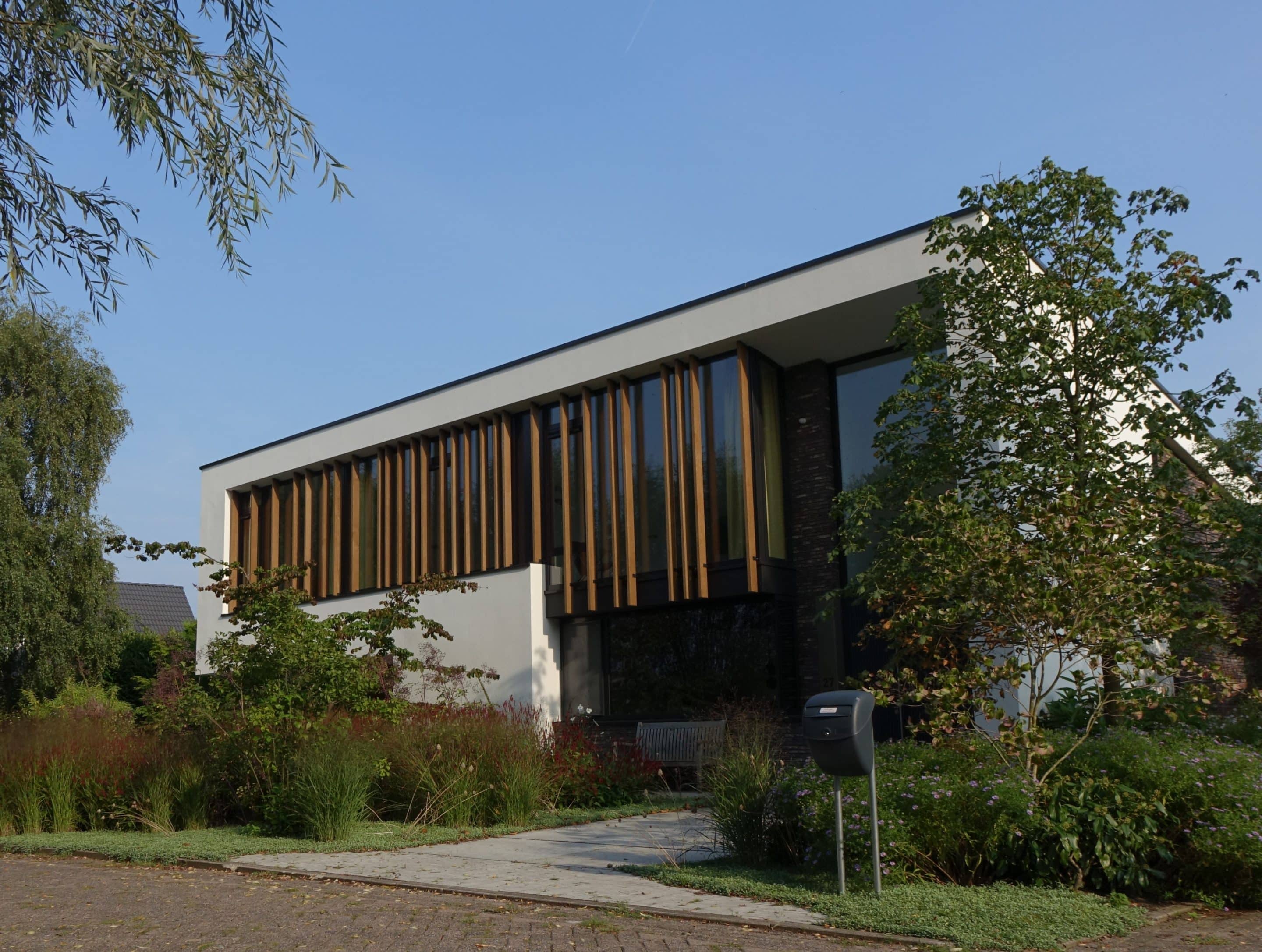
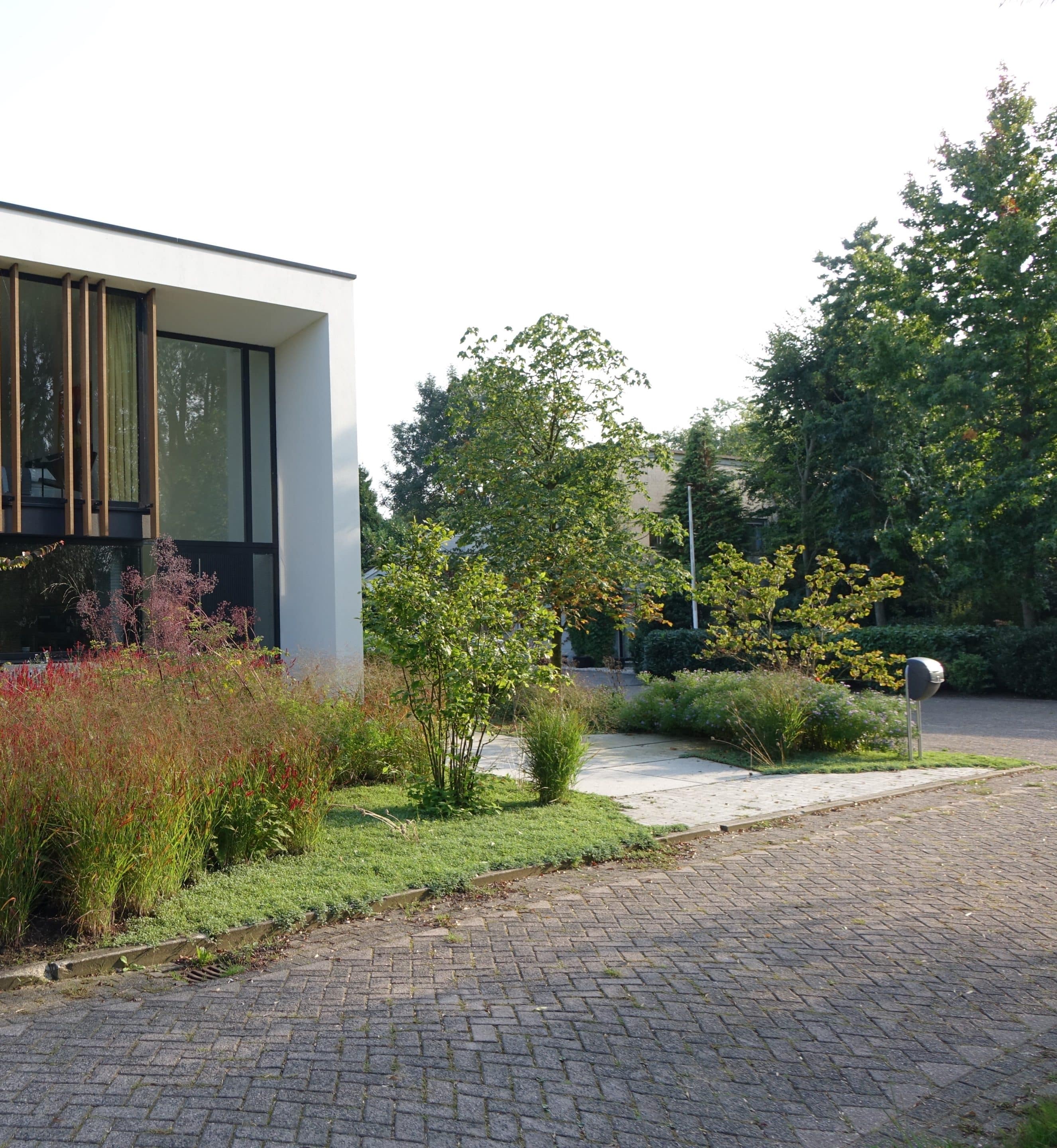
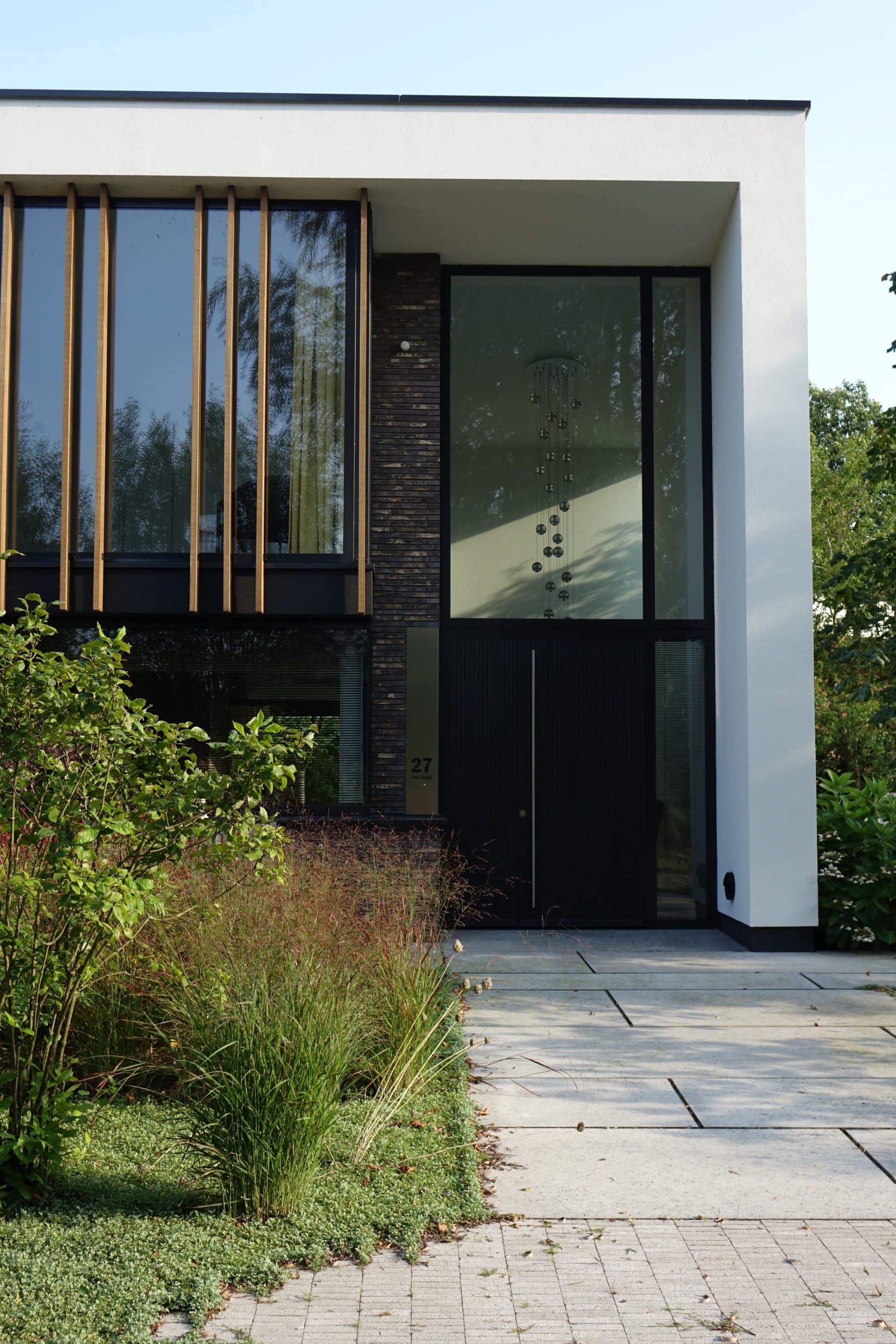

Height differences are also excellent opportunities to give the plants a supporting or more prominent role. When you look at the image of the height difference from different distances, it always changes. As a designer, you also consider that walking up and down the stairs or slope also has a conscious/unconscious tactile experience.
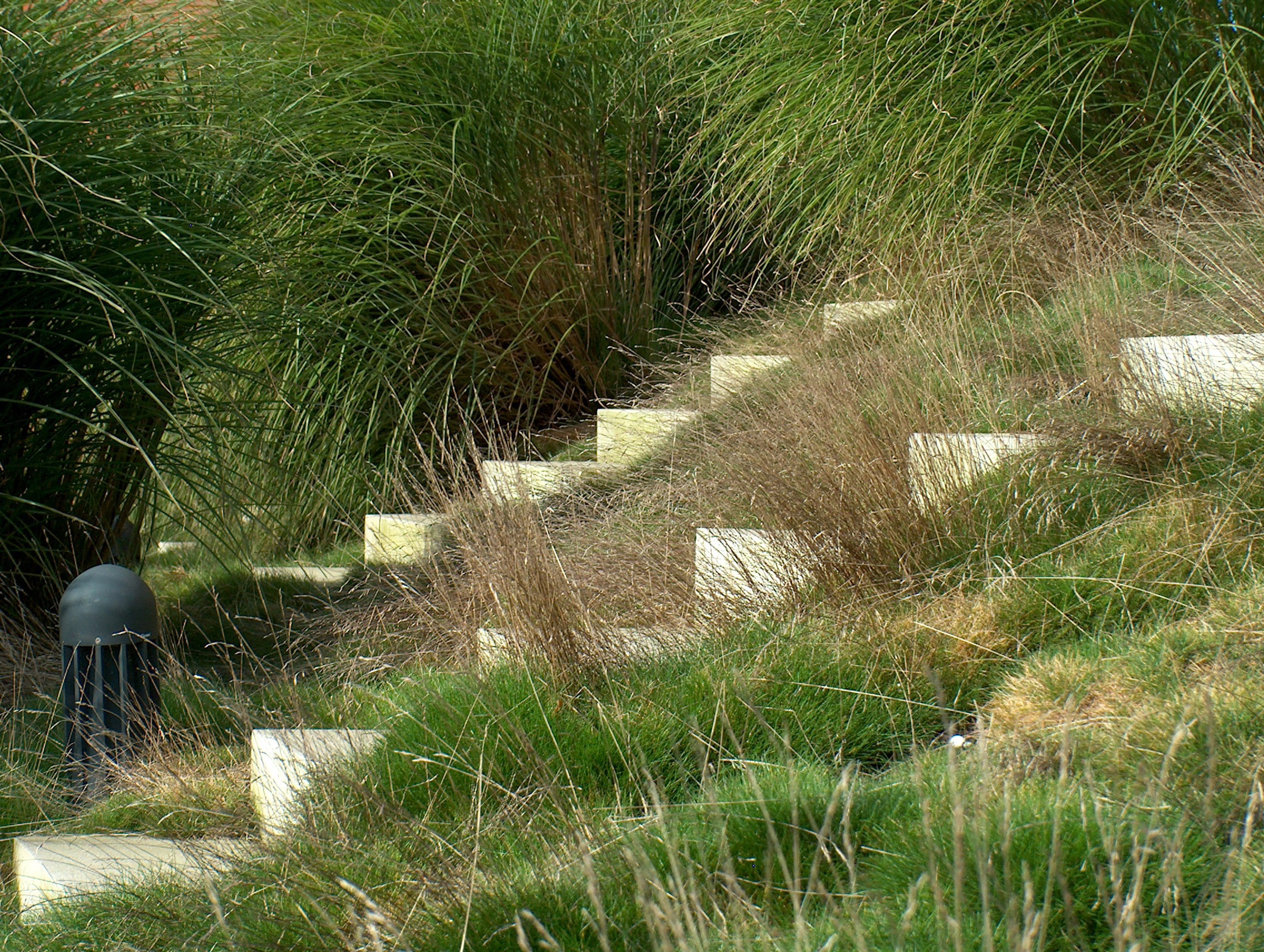
The stairs below are a strong visual element, accompanied by low grasses. Below that, the hedges on the slope, which you walk between. The stairs are somewhat hidden among the low grasses. The hedges themselves create the image.


Zoom in and out
A well-designed planting is harmonious, regardless of the season. Plants play a visual role, both individually and together, allowing you to zoom in and out, consciously and unconsciously.